Tranding
Monday, October 26, 2026 09:10 AM

Egypt continues to implement major national projects to develop its electricity transmission network. These initiatives include constructing new transformer substations, expanding power transmission lines, and integrating them into the national grid. This effort is part of the state’s broader plan to enhance the efficiency of electrical infrastructure, keep pace with rising energy demand, and provide the necessary power supply for agricultural, industrial, and urban development projects across various governorates.
Transformer substations serve as a cornerstone of electrical grids; they adjust voltage levels—stepping them up or down—to facilitate the efficient transmission and distribution of power. This process allows electricity to be transported over long distances with minimal losses, after which the voltage is reduced to levels suitable for use in residential, industrial, and agricultural areas.
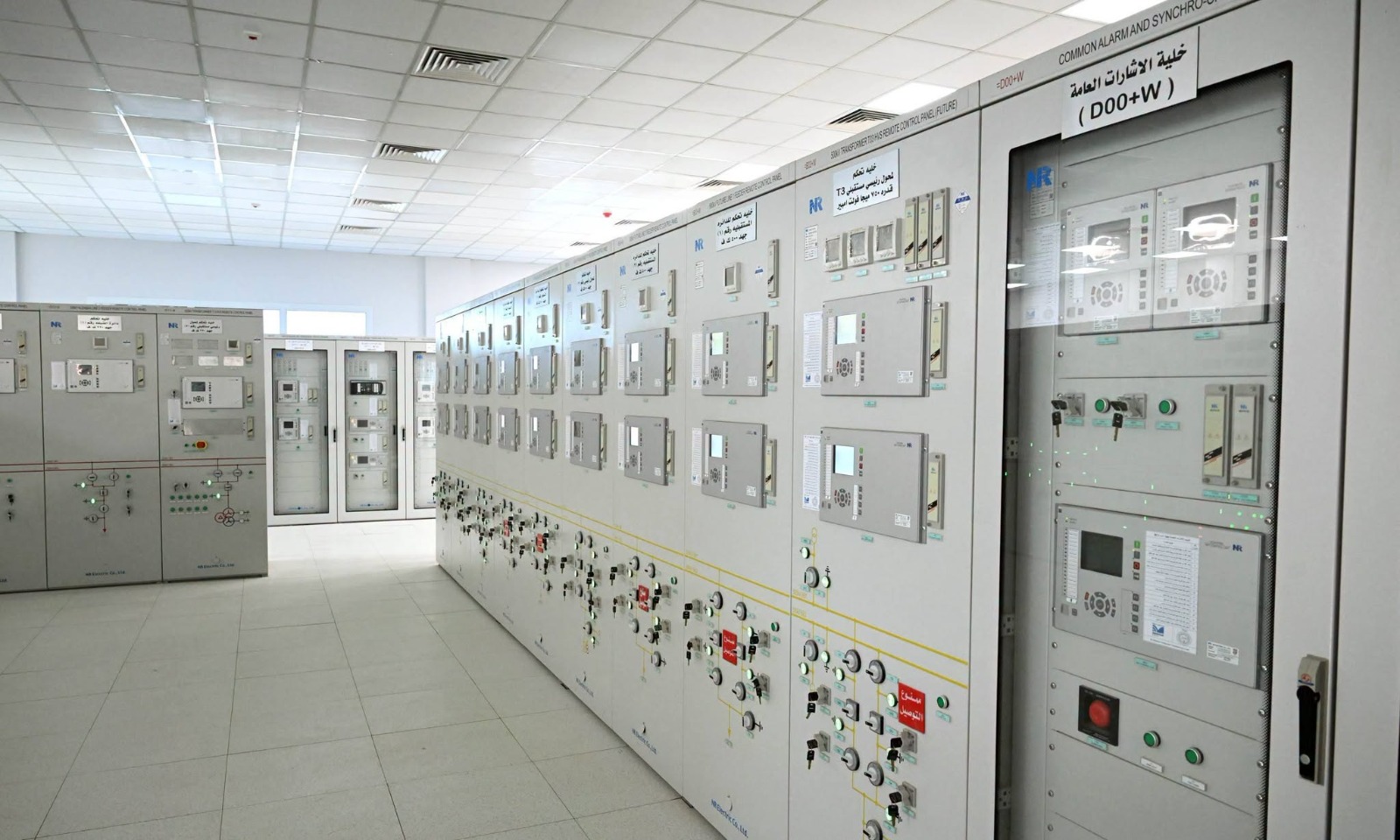
Equipped with transformers, control systems, and protective gear, these substations regulate energy flow, bolster grid stability, and ensure a continuous power supply. They act as a vital link between power generation plants, distribution networks, end-use areas, and development projects.
The projects already completed—as well as those currently underway—reflect the state’s commitment to upgrading the electricity transmission system. By increasing the network's capacity to handle growing loads and new generation output, these efforts strengthen the national grid and improve the quality of the power supply. This is particularly significant as the country expands land reclamation—such as the "New Delta" project—and pursues development initiatives in the Sinai Peninsula, as well as in new industrial and urban zones. Transformer Substations to Support Land Reclamation in Sinai
In the Sinai Peninsula, the "WPS3" transformer substation—part of the Sinai Pumping Stations (WPS) project—has entered service. Operating at a voltage of 66/11 kV, the station has a total capacity of 120 MVA, provided by three transformers, each with a capacity of 40 MVA. It is designed to supply the electricity required for agricultural reclamation and development projects in the region.
The operation of this station is part of a broader system comprising three substations—WPS1, WPS2, and WPS3—with a combined capacity of 1,170 MVA. This infrastructure also includes the construction of overhead power lines spanning a total of 300 kilometers, thereby strengthening the foundational infrastructure necessary for expanding agricultural activities and land reclamation projects in Sinai.
These projects are of particular importance in supporting efforts to develop the Sinai Peninsula, as they provide a key prerequisite for agricultural expansion and the growth of investments related to land utilization and development.
New Zagazig Substation to Enhance Grid Stability
In Sharqia Governorate, the new Zagazig transformer substation has been energized and connected to the national grid. The facility operates across multiple voltage levels: 500 kV with a capacity of 1,500 MVA; 220/66 kV with a capacity of 525 MVA; and 66/11 kV with a capacity of 200 MVA. The station aims to support the electrical grid and increase its capacity to meet rising load demands. It also contributes to supplying power to several areas and substations, including Old Zagazig, Bahtim, Minya al-Qamh, Mashtul al-Suq, Kafr Shukr, Hehia, and Horiya.
The station is part of a broader plan to develop and modernize the unified power grid, improve the quality of electricity supply, and enhance energy distribution efficiency. This strengthens the system's ability to handle increased consumption, particularly during the summer months.
The Borg El Arab Station: A Key Hub for Powering Development Projects
In the northwestern region, the Borg El Arab transformer station has been commissioned and connected to the electrical grid. It operates at a voltage level of 500 kV, in addition to 220 kV, 66 kV, and 22 kV levels, thereby supporting grid stability and enhancing its capacity to transmit power to development zones.
The station plays a vital role in supporting industrial, urban, and agricultural reclamation projects—most notably in the New Delta region—while also facilitating the transmission and distribution of electrical capacity, including power associated with the El Dabaa Nuclear Power Plant.
The grid connection scope includes integrating the two circuits linked to the Abu al-Matamir–Wadi El Natrun line, establishing a connection to the Marsa Matrouh station via 500 kV lines, and implementing additional links using 220 kV cables. The station features specialized technical equipment, including buildings for gas-insulated switchgear (GIS) for 500 kV, 220 kV, and 66 kV voltage levels, a control building, automatic fire-suppression rooms for transformers, as well as oil and water storage facilities, a pump room, and a security/guard building.
These capabilities reinforce the station’s role as a key anchor point within the region’s electricity transmission network, supporting plans for economic and urban expansion.
"ND7," "Rashid 2," and "Rashid 5" to Serve the New Delta
As part of efforts to support agricultural land reclamation and development expansion, the projects include the "ND7" transformer station. Operating at voltage levels of 220/66/22 kV, it is equipped with two 220/66 kV transformers—each with a capacity of 175 MVA—alongside 66/22 kV transformers.
Furthermore, the 66 kV overhead line connecting "ND7" to "ND9"—spanning 34 kilometers and supported by 100 towers—has been energized, enhancing the network's flexibility and its capacity to meet the demands of new developments.
The projects also encompass the "Rashid 2" (NDRPS2) transformer station, which operates at 220/66/11 kV. Utilizing a modern, compact design, the station houses two 220 kV transformers and six 66 kV transformers, providing an operational capacity equivalent to two independent stations, according to project data. Furthermore, the Rashid 5 transformer substation ("NDRPS5") has been established with voltage levels of 220/66/11 kV. It features a capacity of 350 MVA at the 220/66 kV level and 200 MVA at the 66/11 kV level, as part of the New Delta and agricultural land reclamation projects.
These substations are intended to provide the electrical infrastructure necessary for agricultural expansion, enhance the flexibility of the national grid, and strengthen its capacity to accommodate new loads resulting from the growth of productive activities.
Electrical Infrastructure
These projects highlight the diversity of Egyptian investments in electricity transmission infrastructure, encompassing both ultra-high and high-voltage transformer substations.
اليوم الثامن مصدرك الاول لأخبار مصر العاجلة والحوادث والبرلمان وأسعار الأسواق تابع أخبار المحافظات والاسلاميات والمقالات لحظة بلحظة
© AD Brand. All Rights Reserved. Designed by Adbrand Agency
 حسين ابو العلا