Thursday, November 26, 2026 03:19 PM

November 26, 2026 | 3:00 AM
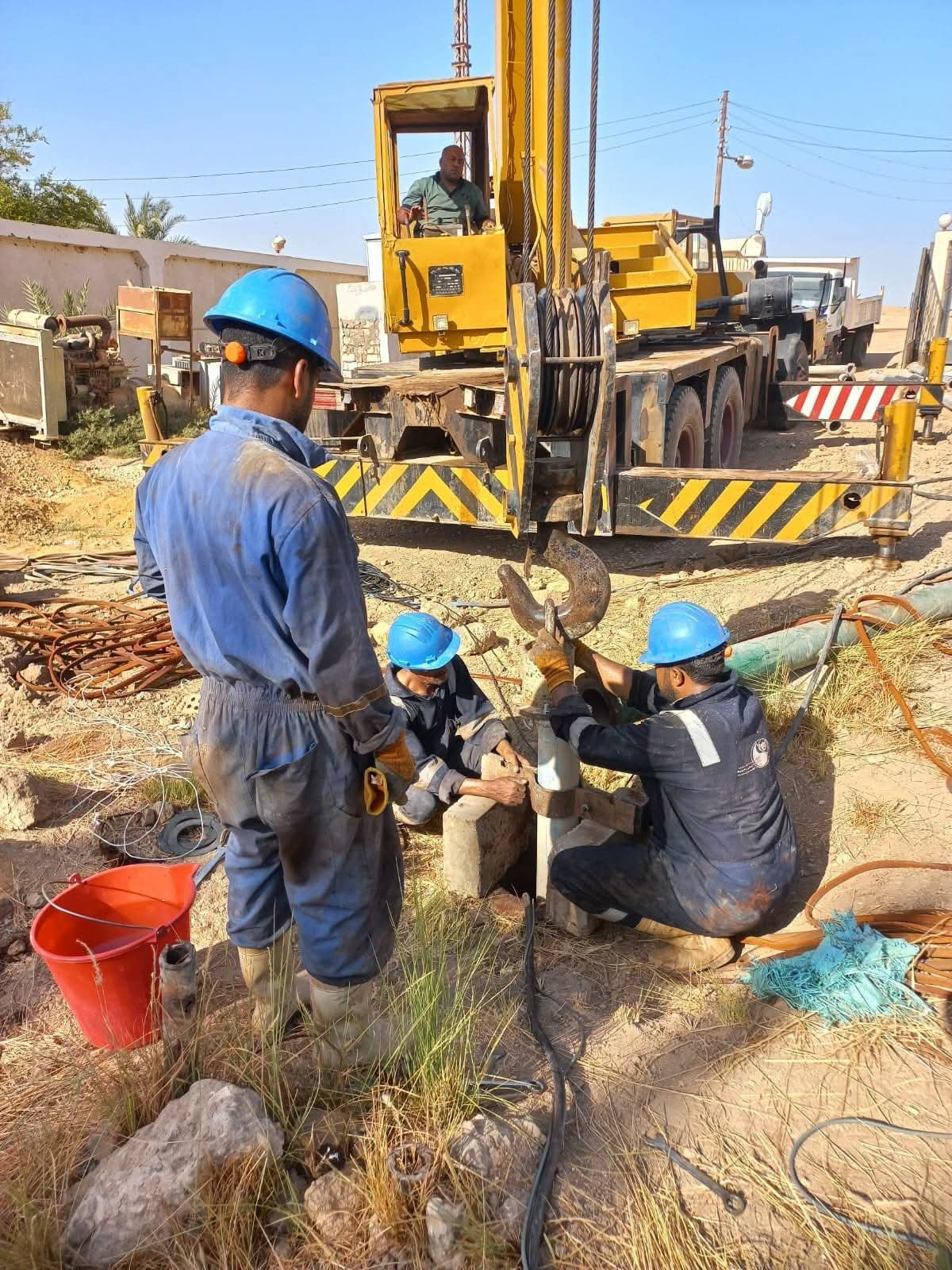
The Hayah Karima initiative has targeted the development of basic infrastructure in villages across Egypt's New Valley Governorate, with a particular focus on improving drinking water services through the construction and upgrading of treatment plants, extending distribution networks, and strengthening water supply systems.
These projects are especially important in New Valley, where groundwater is the primary source of drinking water and residential communities are spread across considerable distances. This geographical nature requires treatment facilities capable of providing safe water that meets health standards, alongside reliable distribution networks reaching residential areas.
Villages in the Farafra Center have witnessed the implementation of water infrastructure projects under the initiative's first phase, with authorities following up on the handover and operation of new facilities and ensuring that the necessary technical components are completed.
In March 2026, the governorate discussed procedures for operating and receiving drinking water stations in the initiative's villages, coordinating with relevant authorities to provide operational requirements and complete the remaining technical work.
Sewage Services and Environmental Protection
Developing sewage systems is another major objective of Hayah Karima projects in New Valley, particularly in villages that previously relied on traditional methods of wastewater disposal. Such practices can create environmental and health risks, including leakage, water accumulation, and potential contamination of soil and groundwater.
The projects have targeted the construction of sewage networks, lifting stations, and treatment facilities to ensure the safe disposal and reuse of treated wastewater in accordance with environmental and health regulations.
Lifting stations play a key role in transporting wastewater from residential communities to treatment plants, while tree forests provide an approved means of benefiting from treated wastewater under applicable environmental and health standards.
Follow-up activities in Farafra have included discussions on completing the operation and handover procedures for several lifting stations and related tree forest facilities, highlighting the importance of completing all components before declaring the service fully operational.
In September, the governorate announced the completion of 321 projects under the first phase of the initiative in Farafra Center, achieving a reported implementation rate of 100%. Procedures for handing over and operating the new service facilities continued, particularly drinking water and sewage projects.
The governorate also discussed the operation and handover of drinking water stations in March after providing financial allocations to complete certain operational components, including lifting stations and tree forests associated with sewage projects.
A total of 25 rural areas benefited from sewage services, serving approximately 62,000 residents, representing 45.4% of the rural population.
124 Stations Under Monitoring
Alongside infrastructure development, relevant authorities continue monitoring existing drinking water and sewage facilities to ensure water quality and the regular delivery of services.
During an environmental sanitation meeting held on November 1, monitoring activities included inspections of 124 drinking water stations, 105 water tanks, and 15 sewage treatment plants.
The follow-up process also covered network and tank cleaning, water sample collection, and regular laboratory testing.
These measures are particularly important given the wide geographical distances across the governorate's five centers: Kharga, Dakhla, Balat, Paris, and Farafra.
The distance between villages and residential communities makes operational efficiency, maintenance teams, and rapid response to technical failures essential factors in evaluating service quality.
Expanding the network of stations and pipelines also requires stronger technical and health monitoring systems, supported by updated databases containing station locations, production capacities, operational conditions, beneficiary numbers, and maintenance records.
Such information helps authorities identify the areas most in need of development and ensure that both existing facilities and newly constructed infrastructure are subject to consistent monitoring.
The Journey of Water to Homes
Drinking water in New Valley primarily comes from groundwater wells. It is then transferred to treatment stations, where the treatment process varies according to the characteristics and composition of the raw water.
After treatment, water is pumped into storage tanks and distribution networks before reaching homes and public facilities.
Treatment methods differ depending on water quality. Some stations rely on filtration, while others use technologies designed to remove iron and manganese. Groundwater facilities also require continuous monitoring of physical, chemical, and bacteriological indicators.
These procedures are especially important in a governorate that relies heavily on groundwater, as natural water characteristics can vary from one well and area to another.
Consequently, each station requires an appropriate treatment system based on laboratory results rather than relying on a single treatment method for all locations.
Providing information about water sources, station production capacities, daily pumping volumes, network losses, and testing schedules can help evaluate the efficiency of the entire process, from the well to the consumer's tap.
Public awareness of treatment stages and laboratory results can also strengthen confidence in drinking water services, particularly in areas where residents have reported changes in water color, taste, or smell.
Water Quality and Laboratory Testing
Following the directives of Hanan Magdy, the governor of the region, water quality remains a key standard for evaluating the efficiency of implemented projects and ensuring compliance with health requirements during storage and distribution.
Drinking water in Egypt is subject to national health standards and regulations, including Ministerial Decree No. 458 of 2007, which establishes standards for water suitable for human consumption.
Laboratory testing includes physical, chemical, and bacteriological examinations covering turbidity, pH levels, color, taste, odor, iron, manganese, dissolved salts, and total hardness, in addition to tests for bacteriological contaminants.
These procedures are particularly important in New Valley because of its dependence on groundwater and the differences in natural water characteristics between locations.
Laboratory monitoring is not limited to water leaving treatment plants. It also includes samples collected from storage tanks, distribution points, and networks to ensure that water quality remains safe throughout the delivery process.
Monitoring also extends to household connections, with attention to the condition of networks and tanks to prevent factors that could affect water quality before reaching consumers.
In April, the governorate received complaints from some residents about changes in drinking water characteristics in certain areas of Kharga City.
At the time, the governor directed officials to investigate the complaints and collect random samples from several stations.
The water company announced that laboratory results showed no problems at the stations or networks included in the inspection, while noting that some observations could be related to household connections.
January 25 and Farafra Water Stations
The January 25 Water Station in Kharga City and the Farafra Water Station have provided important examples of the challenges involved in operating water infrastructure projects and ensuring that facilities move from the construction phase to stable service delivery.
Last August, the governorate discussed the operational status of both stations, the reasons behind declining service in some areas, and technical obstacles affecting their performance.
Relevant authorities were instructed to coordinate efforts to review and resolve technical failures to ensure a regular water supply for residents.
These follow-ups highlighted that improving drinking water services does not depend solely on building new stations. It also requires upgrading existing facilities and ensuring the efficiency of operating equipment, pumps, discharge pipelines, control systems, and electricity supplies.
The Farafra station is particularly important because of its connection to the needs of villages and residential communities throughout the center, while the January 25 station remains a key project for improving services in Kharga City.
Coordination between the National Authority for Potable Water and Sanitary Drainage, the Drinking Water and Sanitation Company, and the governorate is also essential, particularly regarding handover and operation procedures and the provision of necessary funding for maintenance and operational requirements.
اليوم الثامن مصدرك الاول لأخبار مصر العاجلة والحوادث والبرلمان وأسعار الأسواق تابع أخبار المحافظات والاسلاميات والمقالات لحظة بلحظة
© AD Brand. All Rights Reserved. Designed by Adbrand Agency
 حسين ابو العلا